Tag: fitness

  • Healthy Hips

    Healthy Hips

    Important Announcement:

    No normal classes Monday 2nd, Tuesday 3rd, November. This is due to a home-schooling event. (Another one!)

    Afternoon and Tuesday friends…. let me know if there is interest in a Thursday afternoon session on Thursday 5th November as I could do 2 sessions on that day…..

    Please see further down the newsletter for Term 4 dates 💞

    Newsletter Summary and Overview

    As always, I am aiming to keep this entertaining and concise, with a focus towards ongoing education and beyond the linear information that you can get online.

    • Intro
    • Healthy Hips
    • Dates….. Please make note of these dates – including checking your diary for end of year gathering

    …. And hopefully no spelling mistakes – you let me know how I go! I can still edit and make changes if you find any mistakes🙏🏾

    Why a specific focus on hips…. This is to support many of your recoveries, hip, sciatica, lower back, knees, feet, neck, pelvic floor and then on a therapeutic level how it impacts digestion, brain fog, fatigue, elimination and general inflammation with calming everything down.
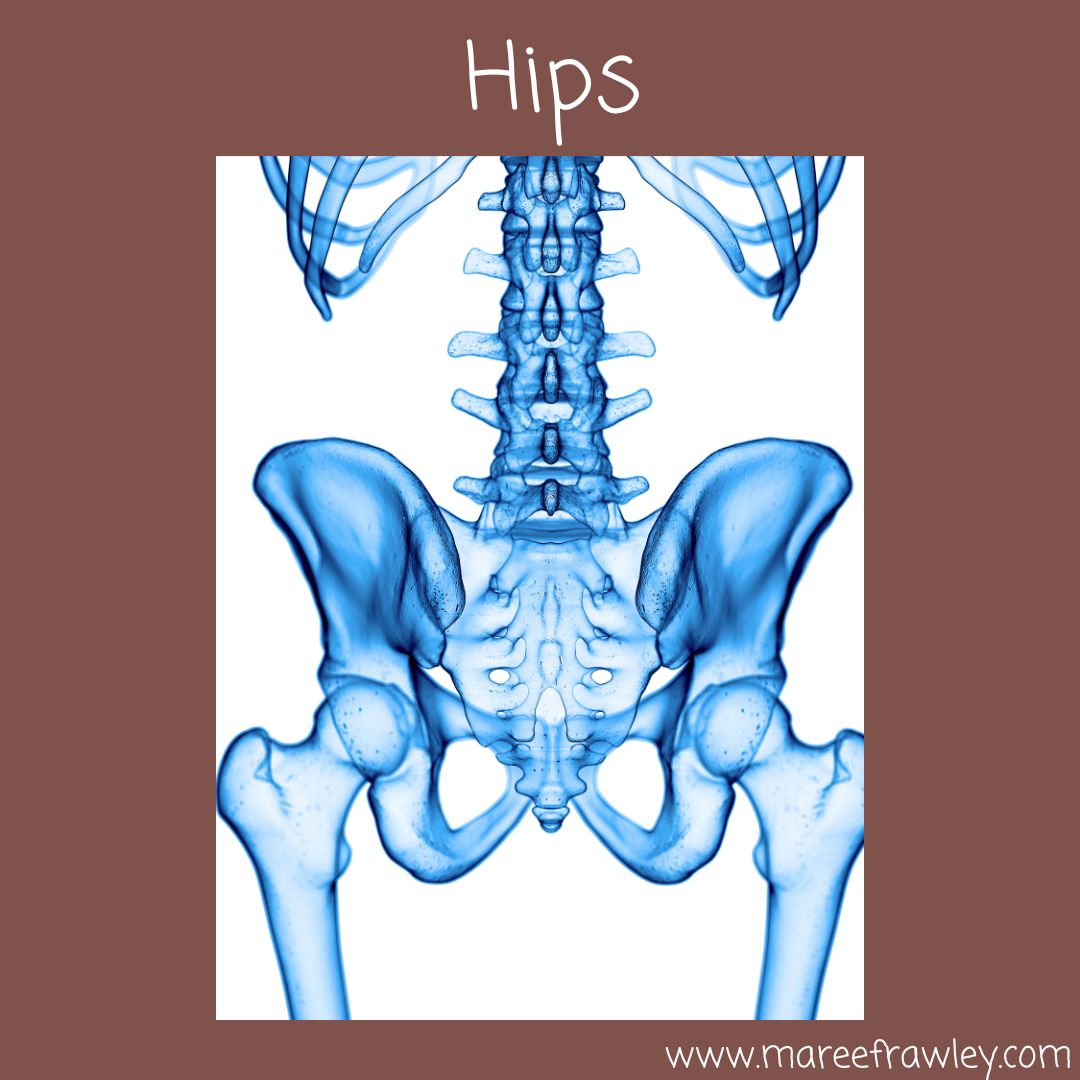
    Hips

    Your hips are strong ball-and-socket joints that link your legs to your pelvis. Your hips power all the basic activities of walking, sitting, standing, and nearly every movement you make.

    Hip problems are often the symptom of a complex chain of mechanics that often involve nerves from the lower back.

    This then flows through the mechanics spine, feet and knees, and broader influences of fascia (the body’s connective tissue web), lymphatic flow, jaw tension, neck position, and overall posture.

    Let us have a look at some of the more common labels of hip pain. I have tried to find some simple diagrams for you to see how it all fits together. All credit to original creators of artworks.
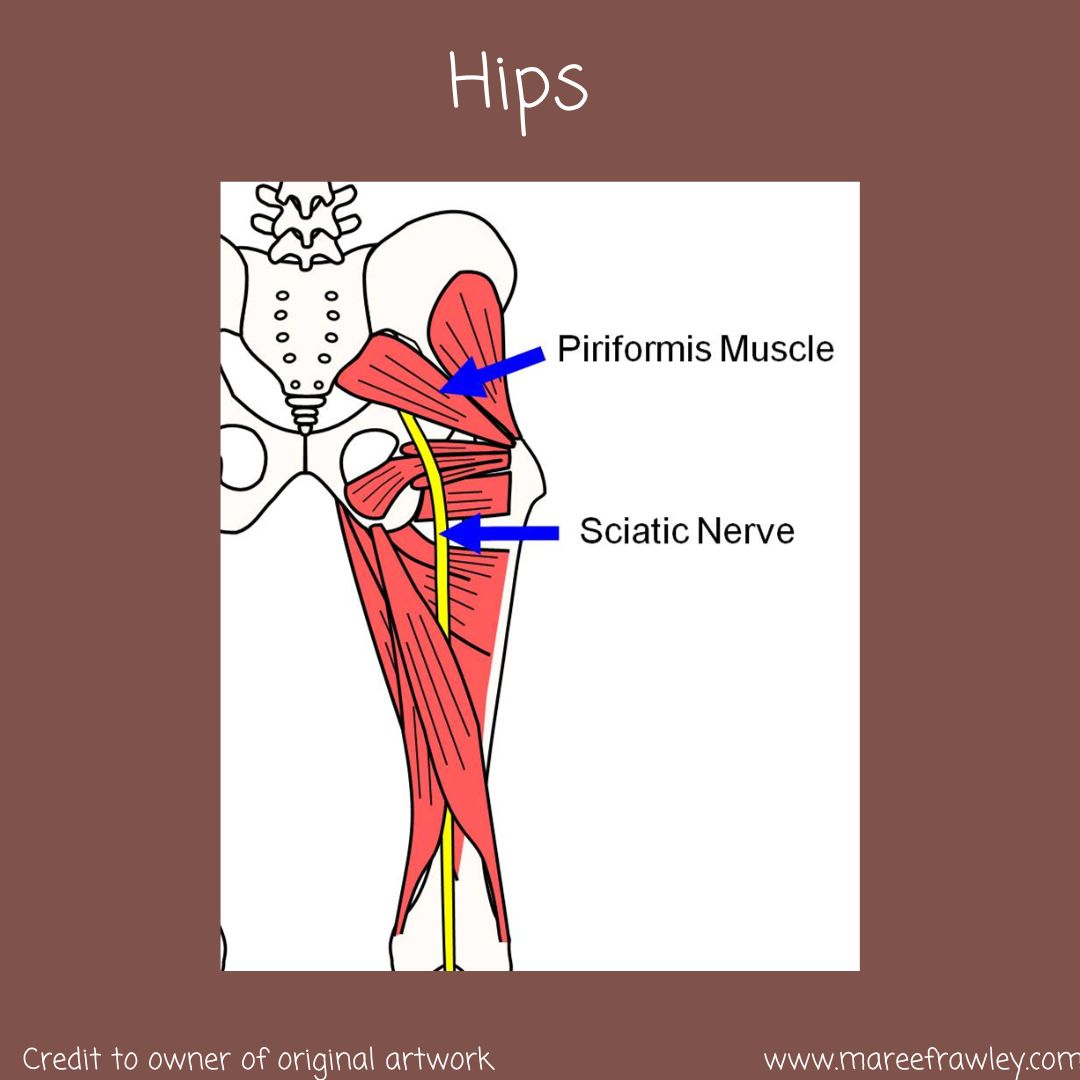
    Common Hip Ailments

    The hip joint has a ball (top of the thigh bone) fitting into a cup in the pelvis, lined with smooth cartilage and a rim of cartilage called the labrum.

    Fluid-filled bursae and surrounding muscles/tendons keep motion smooth.

    Frequent problems include:

    • Osteoarthritis: Cartilage wears down over time. Bones rub, causing groin pain, stiffness, and less movement.
    • Bursitis (especially on the outer hip): The cushioning sac becomes irritated. Pain on the side of the hip often worsens when lying on that side, climbing stairs, or walking.
    • Labral tears: The cartilage rim tears from injury, twisting, or structural quirks. Deep groin pain, clicking, catching, or locking can result.
    • Hip tendinopathy: The tendons that attach muscles to the bones around the hip become irritated or worn from overload or repetitive stress, causing pain and reduced strength—often felt on the outer side or front of the hip.
    • Hip impingement: Ball and socket don’t fit perfectly and pinch with movement. Common in active people; groin pain with deep bending, sitting, or pivoting.
    • Muscle strains and tendinitis: Overuse or sudden stretch of hip flexors, glutes, or other supports. Pain and weakness in the front, side, or back of the hip.
    • Snapping hip: A tendon or muscle slides over bone, creating a snap (sometimes painful).
    • Sciatica and piriformis syndrome: Irritation of the sciatic nerve (often from the lower back or from the piriformis muscle in the buttock pressing on it) can cause sharp, shooting, or aching pain that starts in the buttock or hip and travels down the leg, sometimes with tingling or numbness.

    Many improve with rest, activity changes, and movement work, but lasting or severe symptoms need professional checking and support.

    Nerve Supply from the Lower Back and Hip Health

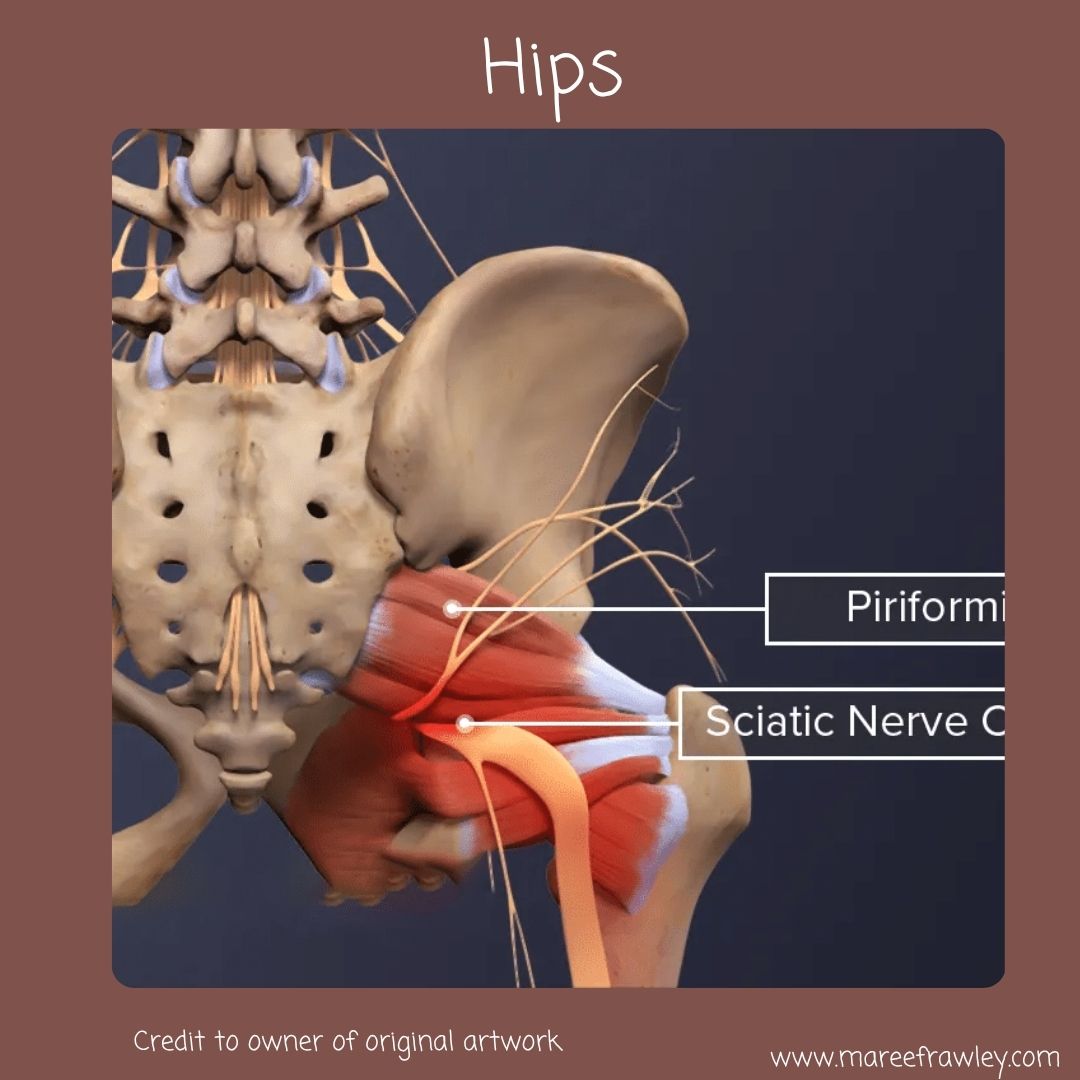
    Nerves controlling hip sensation and muscle power are supplied by the spinal cord (lumbar and upper sacral areas). This is why maintaining nervous system function is essential for recovery and wellbeing.

    Irritation from a spinal disc issue, narrowing, or joint changes in the lower back can send referred pain to the hip, groin, buttock, or outer thigh, knees and feet —even when the hip joint itself is healthy.

    These nerves also influence muscle control; when disrupted, movement patterns can change and overload the hip.

    Limited hip motion can force the lower back to compensate (and the reverse).

    And yes –

    Posture and tension higher up the spine can further influence how these nerves behave.
    .

    The Flow from Feet Through Knees to Hips

    From previous newsletters, we have talked about the idea of your body as a kinetic chain of connection and energy.

    How the feet meet the ground and energy travels upward.

    It is also the flow of energy from head position, shoulders and spinal alignment down through to the feet.

    Mechanical processes that can contribute to injury and inflammation include:

    • Excessive inward rolling of the feet (overpronation, often with flatter arches) rotates the lower leg inward.
    • Knees may drift toward each other, and hips can rotate or drop inward taking excess load and causing knee and hip tracking inefficiencies.
    • Stresses on the hip joint overworks outer hip muscles, down through the side seams of your legs.
    • Stiffer high-arched feet absorb less shock and can send more impact upward into knees, hips, lower back and leg muscle imbalance.
    • The knee, mainly a hinge, suffers when forced to twist, or have altered tracking lines which can alter how the thigh bone sits in the hip socket.
    • Small daily imbalances add up over thousands of steps.
    • Appropriate footwear for the individual, foot strength, and knee control, core activation and muscle balance often ease the load on the hips.
    • Core stability, core activation and muscle balance will all assist the ongoing health of hips and spinal health.

    Take a breath and mental moment so you can grasp the holistic aspects of hip health…. 💞

    The Roles of Fascia and Lymph with Hip health

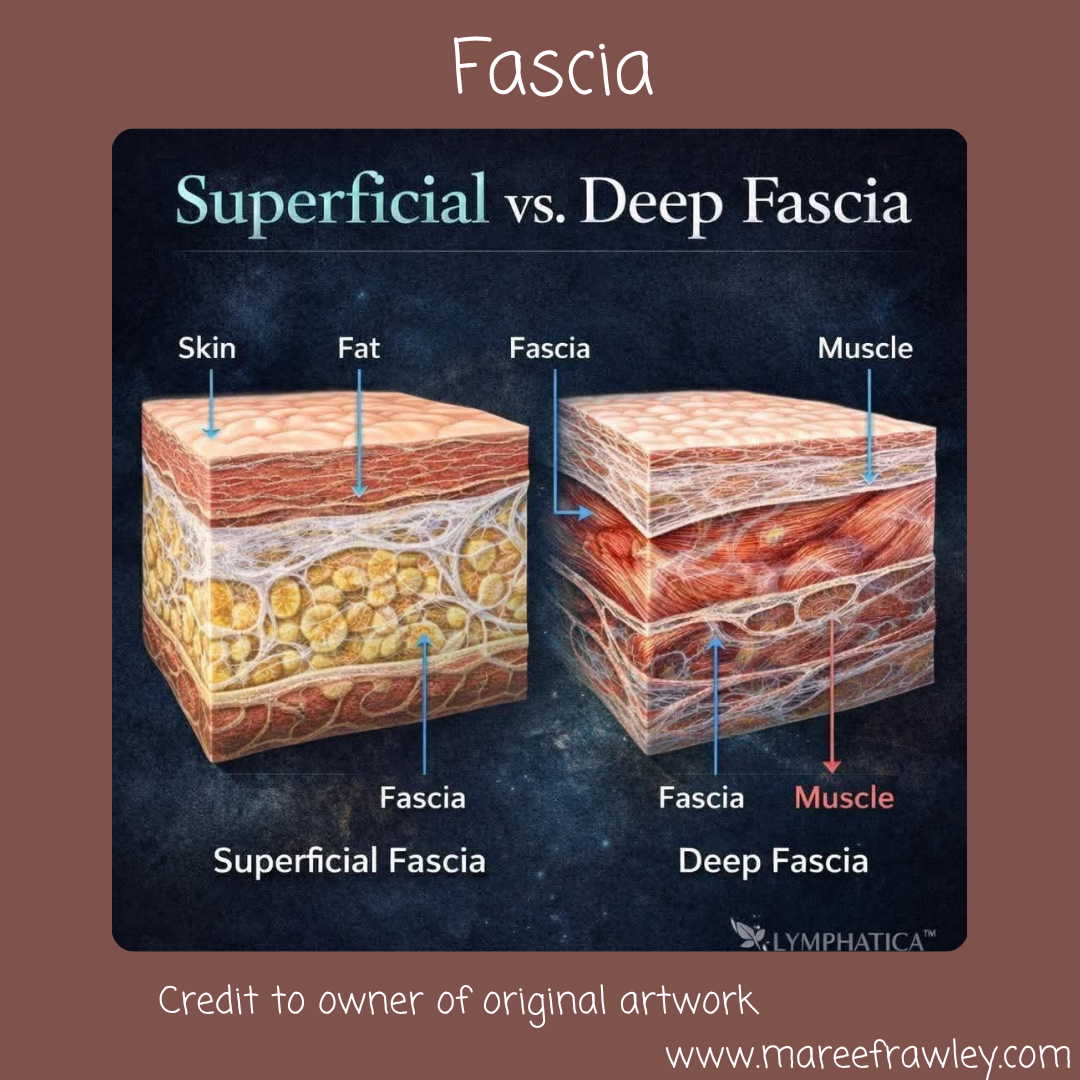
    Around the hip fascia forms compartments that link to the thigh, pelvis, lower back, and beyond via long myofascial lines (including connections through the abdomen and up the spine).

    Healthy fascia slides and transmits force smoothly.

    When fascia tightens or sticks (from injury, poor posture, or repetitive strain), it can restrict hip movement, alter force distribution, and contribute to pain or compensation patterns.

    Restrictions elsewhere in the fascial web can pull on the hip region. We have talked about these cross patterns in our classes and how they can impact various flow on points way beyond the initial trigger area.

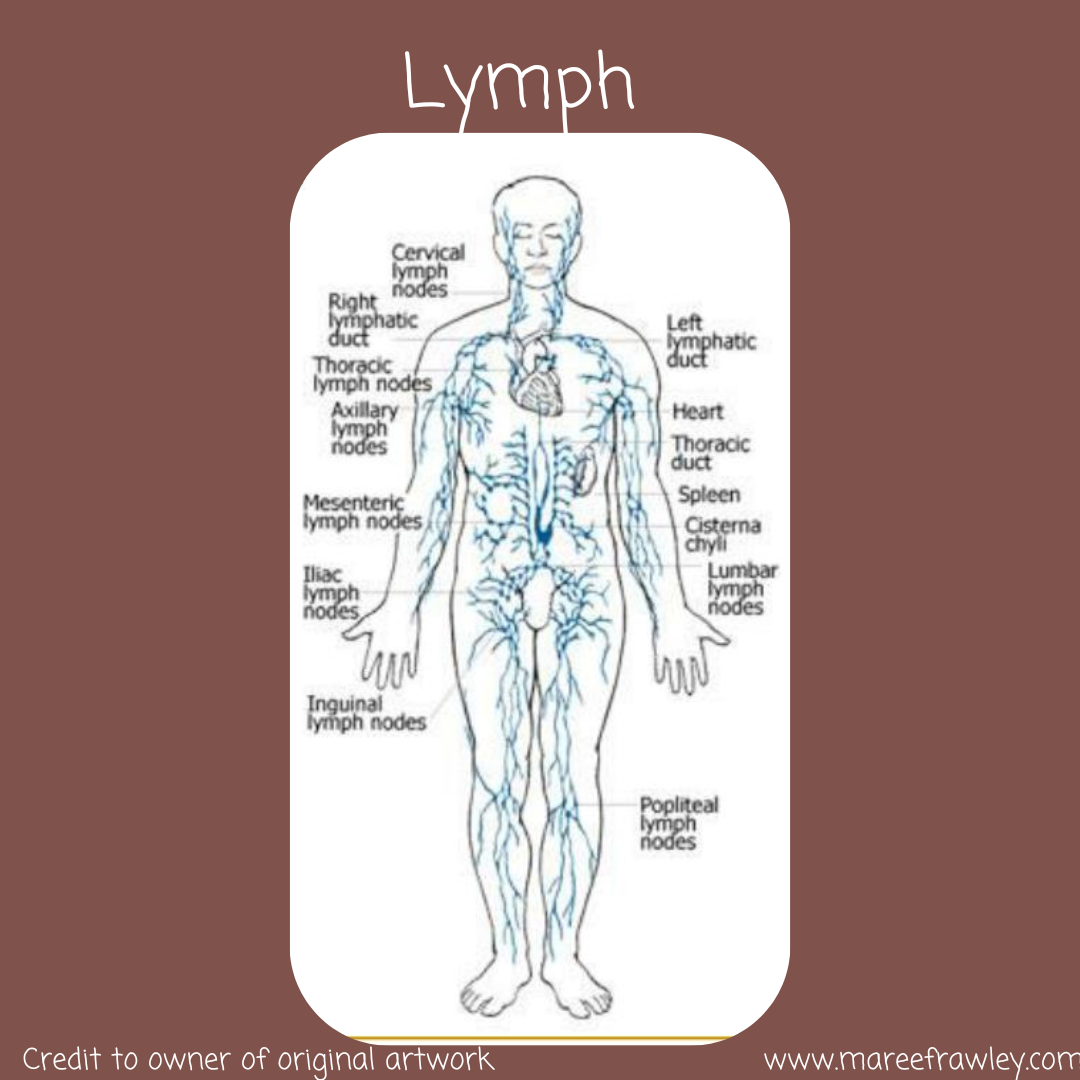
    Lymph is the fluid that carries waste and supports immunity.

    The pelvis and hip area have important drainage pathways.

    Movement, muscle activity (especially the “pumping” action of the diaphragm with breathing and the pelvic muscles), and unimpeded fascia help keep lymph flowing.

    Reduced movement, tight tissues, or poor posture can slow drainage, allowing fluid and inflammatory substances to linger. This may contribute to a sense of fullness, swelling, or ongoing irritation around the hips and pelvis. Gentle whole-body movement and good breathing support lymphatic flow.

    Jaw, Neck Position, and Posture: The Upstream Influence

    Posture is the big organiser.

    How you hold your head and neck affects the entire spine and pelvis, which in turn changes hip loading and muscle balance.

    Forward head posture (common with screens) or tension in the neck often pairs with jaw clenching or TMJ (jaw joint) habits.

    The jaw, neck, tongue, diaphragm, deep core, and pelvic floor are linked through continuous fascial and neuromuscular pathways (sometimes described as part of the body’s deep front line).

    • Tension at the top can travel downward:
    • Jaw bracing alters neck muscle tone → changes spinal curves → shifts pelvic tilt or rotation → alters how the hips sit and move.
    • The reverse also happens—pelvic or hip imbalance can change breathing and head position, leading the jaw to compensate.
    • A sway-back or overly arched posture, for example, can increase demand on the front of the hip during walking.
    • Balanced head-over-spine alignment, relaxed jaw, and free neck movement help the pelvis and hips share load more evenly.

    Putting a plan together for great hip health

    • Strengthen glutes and deep core for stability.
    • Support the feet and encourage good knee tracking.
    • Move regularly to keep fascia sliding and lymph flowing—walking, gentle mobility work, and diaphragmatic breathing help.
    • Check posture: ears roughly over shoulders, shoulders over hips. Soften the jaw (tongue resting on the roof of the mouth, teeth slightly apart) and avoid prolonged forward-head positions.
    • Address restrictions higher up (neck/jaw) or lower down (feet) if they persist, as they can influence the hips.
    • Healthy hips benefit from a connected approach: local strength and mobility plus attention to the feet, nerves, fascia, lymph flow, jaw, neck, and posture.
    • Small improvements across the system often create freer, more comfortable movement. steady improvements with wellbeing will always be best.
    • REMEMBER When intervening patterns …. the body does not always enjoy the help and the new pathways. This is why changes must be small and consistent so the nervous system remains calm and on the pathway of reprogramming.
      • Sometimes just before amazing improvements our body has to prepare which can feel like discomfort and pain….
      • I am not staying to pursue pain….
      • After our sessions, we should never have joint or nerve pain.
      • Take immediate action with numbness.
      • Muscle adaptation is sometimes acceptable.
    • REMEMBER It is your body! Slow, small, consistent changes that your body accepts will always create better long-term outcomes.

    When to get help

    Pain lasting more than a couple of weeks, limiting daily life, or accompanied by weakness, numbness, or swelling deserves assessment by a mechanical expert such as Chiropractor or Physiotherapist.

    They can sort joint, nerve, mechanical, or soft-tissue contributors.

    Be wiser than seeking symptomatic relief…. also address the cause!

    Disclaimer: This is general educational information, not personal medical advice. Bodies are individual—professional guidance is best for your situation.

    A moment for you….

    3 hours – Refocus, Renew and Recharge

    There are a few spaces left for the October date


    Whether you are Buddhist, Spiritual, Universal, Christian or any other belief and if your mind is open, my heart is ready to help you shift, rejuvenate, repair, improve, calm and restore. ~ Maree

    There is no singular pathway to healing and health.  It is essential to find your own individual path to build strength and resilience so you can embody all that keeps you strong.

    Collaborating with the diverse healing talents of the Wellness Path Team, we provide a pause in your life where you can peel away the stress, the stored grief, physical and emotional inflammation and leave lighter and brighter to resume your day. 

    We know your time is precious so we will give you 3 hours to share this beautiful journey of renewal and rejuvention.

    A 45 min treatment of either a facial, massage or energy healing. 

    Mindful movement for calming adrenals, hydrating fascia,  moving lymph and feeling wonderful. Any injuries, health concerns and limitations are all catered for. 

    A small group with individual attention. 

    Meditation, sound bath and relaxation techniques to elevate your daily toolbox of fulfilling living. 

    Breathwork and more to elevate your emotional health and present time consciousness. 

    Refreshments and snacks included. 

    Optional extra hour for complimentary Spa and Sauna

    Please also let me know if you plan to attend 😊

    Monthly Sound Chakra Healing Meditations

    Held at The Wellness Path.

    Hour session (it is a bit longer) $35 cash paid on the day

    November Saturday 28th – 4.15pm

    December Saturday 19th – 4.15pm

    Dates Reejuv Fusion for October / November 2026

    Monday 4.15pm

    Tuesday 8.55am

    Thursday 10.45am

    All at Corlette Hall

    Exceptions:

    No classes on the following dates

    Monday 2nd November, Tuesday 3rd November

    Thursday 5th November I can do an afternoon session as well as the 10.45am

    All other expected sessions are on!

    Last class for year will be Tuesday 22nd December 8.55am – expected recommencement date Tuesday 5th January 2027….. I just had a little panic attack typing that date!

    End of year gathering

    I think down at the park has been a beautiful end of year event – bring a plate to share… and manifest beautiful weather 💞

    Can you have a quick look in your diaries and let me know your preference for either Tuesday 17th November or Tuesday 24th November (I will choose by popular availability).

    Midday – bring a plate to share and any other suggestions. I will confirm the details in our next newsletter and at classes.

    Maree Frawley Holistic Health Therapeutic Yoga @mareerejuvenate

    I hope you enjoyed the information 🤗

    ~ Best Wishes Always ~ Maree

    @mareerejuvenate

  • The Soul of Spring

    The Soul of Spring

    I am aiming to keep this entertaining and concise – wish me luck!

    (I just finished the fascia part… it might be too much information… write down your questions as you go 🙏🏼)

    • Intro
    • Spring including the Westerly winds
    • Fascia – the idea of hydrated fascia
    • Holistic applications and nerve supply
    • Dates….. Please make note of these dates
    • Retreat and Sound Healing Dates

    …. And hopefully no spelling mistakes – you let me know how I go! I can still make changes if you find any mistakes🙏🏾

    Maree Frawley holistic wellness advocate. Helping you to decipher information to formulate your best action plan.

    As we welcome Spring and all the fluctuations of cold, warmth and all the varieties that Spring brings, we get back to basics to ensure that we continue to improve our overall wellbeing.

    Healing and Transformation with @mareerejuvenate Maree Frawley. Therapeutic Yoga, Holistic Health Coaching.

    Let’s keep it simple and heartfelt to deal with Westerly winds:

    • Enjoy the release with some antioxidants with in season berries… no chemical produce would be ideal.
    • Vitamin C and antioxidant herbal teas.
    • Stay hydrated with quality filtered water
    • Prioritise that restorative sleep you all deserve. If you have a bad night… remember your breathwork, your emotional health and to do things that help you feel inspired!
    • Move your body in ways that we cover in our sessions
    • Be mindful of your thought patterns and where they take you with stress or feeling good.

    Fascia – The basics

    If you have not already… make a cup of your favourite tea – take a relaxing breath and enjoy this information – it is alot!…. You have plenty of time to process 💞

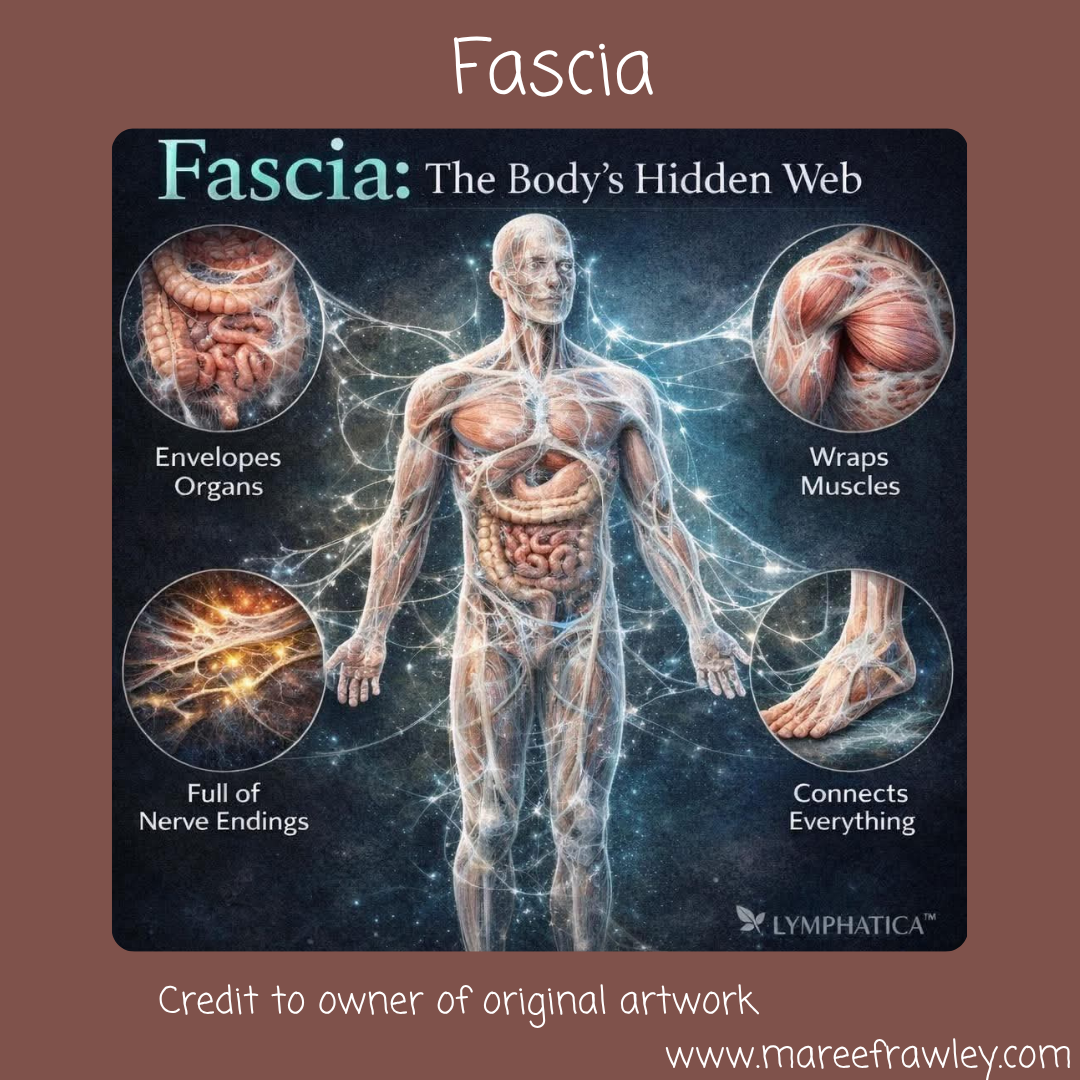
    Fascia is a continuous web of connective tissue that surrounds, separates, and connects every muscle, bone, organ, nerve, blood vessel, and structure in the body.

    I like to think of Fascia as an effective goo that moves as we need it to move easily and gracefully….

    Fascia is made primarily of collagen and elastin fibers suspended in a gel-like substance rich in water and hyaluronic acid.

    Healthy fascia is pliable and nearly frictionless, allowing tissues to glide, absorb shock, transmit force efficiently, and maintain posture and shape.

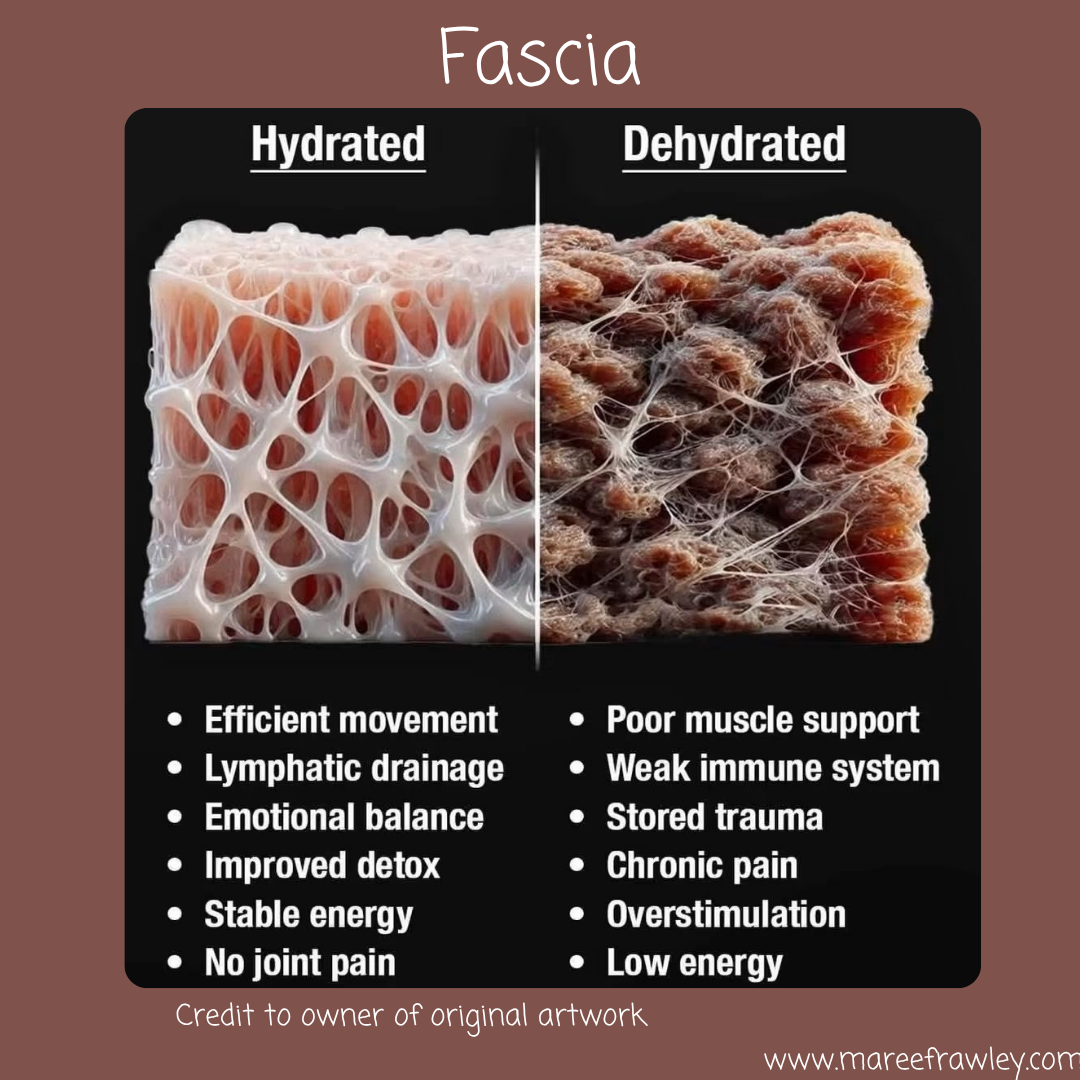
    Hydrated vs. Dehydrated Fascia

    An Analogy for you….

    Think of healthy, hydrated fascia like a soft, fully soaked sponge.

    The healthy sponge can readily absorb nutrients, oxygen, and supportive fluids from the blood supply and surrounding tissues.

    With each natural “squeeze and release” from movement or breath, it easily expels metabolic waste, inflammatory byproducts, and excess fluid into the lymphatic and circulatory systems for clearance. Making room for the essential nutrients that it needs.

    This springy cushion and shock absorption distributes pressure smoothly across a wide area.

    A dehydrated sponge, by contrast, becomes stiff, sticky, and compressed. It can no longer absorb helpful substances efficiently or clear waste well, so metabolic byproducts may linger and nutrient deficiency result.

    This is can be why the same area in our body can be triggered with inflammation over and over again. It can be musculoskeletal, visceral (organs), cellular, lymph … and so on.

    When Fascia has lost its cushioning bounce, loads transmit unevenly and harshly, creating focal pressure points that stress joints, cartilage, and bone.

    Over time this inefficient force distribution can accelerate wear-and-tear and contribute to the mechanical stresses associated with osteoarthritis, including pathways toward reduced joint space and bone-on-bone contact.

    Pause for a moment and jot down any thoughts or questions….

    Relationship to Lymph and Nerves

    Fascia contains and supports lymphatic vessels and interstitial fluid spaces.

    To help Lymph move well – we need healthy fascia!

    Healthy, mobile fascia aids fluid dynamics and lymphatic return via mechanical pumping effects. Pumping is created via movement. Gentle movement of effective breathwork and gentle fluid movements.

    Restricted or dehydrated fascia can impair fluid flow.

    Fascia is also richly innervated (estimates suggest hundreds of millions of sensory nerve endings across the body-wide network) and forms protective sheaths around nerves.

    Fascia contributes significantly to proprioception (where our body is in time and space), pain signaling, and overall sensory feedback.

    Are you still with me…. hang in there!

    Holistic elements of hydrated fascia and effective lymph movement require effective nerve supply.

    Nerves need several key conditions for optimal function:

    • Adequate blood supply delivering oxygen and nutrients
    • Freedom from mechanical compression or irritation so they can glide and slide with movement
    • A balanced bio-chemical environment with low inflammation
    • Appropriate surrounding tissue support (including hydrated, mobile fascia)
    • Balanced alignment and loading so that joint and soft-tissue stresses do not create sustained pressure on nerve pathways

    When fascia densifies or restricts, it can reduce glide, alter local fluid exchange, and contribute to nerve irritation, wear and tear and or sensitisation.

    This is something that we talk about in our sessions….

    Restoring fascial mobility and hydration helps protect nerve function.

    Why Movement, Breathwork, and Professional Care Matter

    Sponge analogy…. Varied and multi-directional movement acts to effectively and repeatedly wring and re-soak the sponge.

    Fluid, easy, movements promote fluid exchange that help to prevent adhesions and keeps impact distribution even through the mechanics of your body.

    Breathwork (especially lateral thoracic breathing) creates rhythmic pressure changes and gentle fascial stretch through continuous connections (as you know via our class quizzes 😂diaphragm to psoas and thoracic area fascia), supporting fluid flow, reducing tension, and aiding lymphatic/venous return.

    As a note – this is why breathwork is key for cardiovascular health including blood pressure….

    Specific Chiropractic Care can assist these efforts holistically. The spinal and joint alignment, nerve supply, mobility restrictions, and biomechanical imbalances are an important aspect of nerve, lymph, fascia and overall health.

    By improving joint function and posture through specific adjustments, appropriate movement and breathing techniques, improvement can occur across:

    • Reducing abnormal mechanical stress on joints and surrounding soft tissues
    • Decreasing potential sources of nerve irritation or interference linked to joint, immune system and health dysfunction
    • Support more efficient movement patterns that help keep fascia mobile and hydrated
    • Enhance overall load-sharing across the musculoskeletal system, which may lessen focal pressures that contribute to wear and tear.

    A quick note about Manual Lymphatic Drainage

    Beware heavy treatments for Manual Lymphatic Drainage. Slow and steady improvements with wellbeing will always be best. MLD should not hurt or cause physical discomfort. I will cover this topic more in the next newsletter.

    Important….

    Dehydrated or restricted fascia loses its ability to distribute force.

    You have lived this – bone on bone and terms that you would have heard thrown around in your world

    This dysfunction leads to more compressive loads onto joint surfaces, accelerating cartilage deterioration and the progression toward osteoarthritis symptoms.

    Restoring glide, hydration, and balanced alignment supports healthier joint mechanics.

    Aging is inevitable – is dehydrated fascia related to wear and tear

    Yes, aging is inevitable, and changes in fascia are part of that process.

    With age, fascia typically loses some water content, becomes less elastic, develops more collagen cross-links, and can thicken or densify in certain areas.

    These shifts contribute to greater stiffness, reduced glide between tissue layers, and diminished shock absorption.

    Depending on the individual, the techniques covered above are more than enough to improve and support recovery.

    Link Between Dehydrated/Densified Fascia and Wear & Tear

    Dehydrated or densified fascia reduces the tissue’s ability to distribute forces evenly.

    Instead of acting like a resilient, springy network that shares load across muscles, tendons, and joints, restricted fascia can create uneven pressure points.

    Altered mechanics increase focal stress on cartilage and bone surfaces in weight-bearing or high-use joints such as the knees, hips, lower back and shoulders.

    Over years, that extra mechanical burden contributes to the progressive wear that characterizes osteoarthritis.

    Research shows age-related fascial changes (including reduced hydration and increased stiffness) are associated with decreased joint range of motion and can compound the effects of inactivity, which further worsens densification.

    I want to talk about hypermobility here… but I will save it for another newsletter.

    Fascia changes are only one piece of a multifactorial process that also include prior injury, inflammation, muscle strength, alignment, and body weight. (plus more)

    Can “Hydrating” Fascia Assist Bone-on-Bone Areas?

    Improving fascial hydration and mobility (through consistent varied movement, appropriate loading, breathwork, manual therapies, and overall tissue care) can help in several supportive ways, especially in earlier stages or alongside other management strategies:

    • Better force distribution and shock absorption around the joint
    • Improved tissue glide, which may reduce compensatory tightness and secondary pain
    • Enhanced local fluid exchange and lymphatic flow
    • Support for healthier movement patterns that lessen abnormal joint loading and improve nerve supply
    • Potential reduction in nerve irritation from restricted surrounding tissues

    In joints already showing advanced “bone-on-bone” changes (significant cartilage loss visible on imaging), hydrating fascia in most cases will not regenerate lost cartilage or reverse established structural damage.

    This requires in person discussion!

    Holistic support can do help the surrounding soft-tissue system function more efficiently, which often improves comfort, mobility, stability, and quality of life.

    Some people with radiographic bone-on-bone findings still move relatively well when the surrounding fascial and muscular support is optimized—this is why not everyone with the same X-ray findings has the same level of symptoms.

    Practical approaches that support fascial health (movement that “squeezes and releases” the tissue like a sponge, specific and appropriate strength work for better load-sharing, mobility work, and skilled manual or chiropractic care for alignment and joint function) remain valuable at any age.

    In short: dehydrated or restricted fascia is related to increased wear-and-tear stress, and improving its hydration and mobility can meaningfully assist function and comfort around compromised joints such as knees, hips, and shoulders.

    For the Bone on Bone Discussion….

    Yes, there are options that can enhance function, reduce pain, improve quality of life, and sometimes slow further deterioration in bone-on-bone (advanced osteoarthritis) scenarios.

    Most approaches focus on symptom management, better load distribution, reduced inflammation, stronger supporting tissues, and overall joint resilience rather than reversing the bone-on-bone state itself.

    Many people with radiographic bone-on-bone findings still achieve meaningful improvements in comfort and mobility.

    Core Evidence-Based Foundations (Strongly Recommended)

    These form the foundation of care for knees, hips, shoulders, and other joints:

    • Exercise — Balanced strengthening of the muscles around the joint (especially quadriceps, hips, and core for lower-limb joints), low-impact aerobic activity, and neuromuscular training improve stability, reduce load on the joint surface, and often decrease pain.
    • Weight management (if overweight) — Every kilogram lost reduces force through the knees with each step. Even modest loss can meaningfully ease symptoms and slow progression. If underweight…. build muscle!
    • Activity modification and joint protection — Using walking poles, and other techniques we have discussed can help distribute load more evenly during daily tasks.

    Holistic Approaches

    Solutions!

    • Mind-body movement practices — REEJUV, Tai chi and yoga have good evidence for reducing pain, improving function, balance, and stiffness.
    • Manual therapies — Soft-tissue work, myofascial techniques, or chiropractic care aimed at improving surrounding tissue mobility, alignment, and fascial glide can help reduce secondary restrictions and improve overall mechanics (consistent with the fascia discussions we have had).
    • Anti-inflammatory nutrition – maybe next newsletter
    • Heat/cold therapy – sports balms to manage stiffness and pain.
    • Breathwork and stress reduction — Helpful for pain perception and overall well-being.

    Well…. that is a foundation overview of Fascia

    As you know I am qualified to be discussing this with you.

    Whatever your next steps may be …

    Be efficient and effective and have individual guidance and professional support to ensure efforts are specific to the needs your bio-individuality.

    Mindful Movement for Lymphatics and Fascia

    We will continue to cover all of this in our sessions at Corlette Hall.

    For anyone who wants a little more intensive support, I will be doing some specific classes at The Wellness Path. These sessions will also be perfect for anyone struggling to get down on the ground, as the bench there is perfect for the transition to getting back onto the ground.

    Mindful movement is a journey of gentle fluid movements with the following intentions. 

    – joint mobility and health

    – Balance, proprioception and nerve supply 

    – specific injury and health support

    – hydrating fascia and movement of lymph

    – balancing adrenals and nervous system

    – Cranial Sacral support including Cranial nerve toning

    – breathwork

    – stress management support

    – techniques to balance hormones and those sleeplessness nights

    $35 per hour session (I might be able to extend your normal class rate for these sessions – ie. take a visit of your class pass)

    Dates you can choose from

    Thursday 24th 1pm

    Saturday 26th 4pm

    Monday 28th 1pm

    I am not sure whether these sessions will be regular as it is all fluid discussion…. just let me know if you are interested and then I can update you as information comes up.

    Evolutions in Our REEJUV Fusion Classes

    As you are experiencing our REEJUV Fusion classes feel are evolving to support your needs even further with all this new study that I am pursuing.

    We weave mindful movement, targeted mobility sequences, breath work, and fascial release techniques together in a way that hydrates and “de-glues” the tissue while building strength and stability.

    The breathwork, multi-dimensional movements help restore that vital glide between layers, move fluids (helping clear toxins and deliver nutrients), calm the nervous system, and support the deep core and hip stabilisers we talked about earlier.

    Other Upcoming Events

    Upcoming Events

    Some retreats coming up that I facilitate at The Wellness Path.

    3 hours – Refocus, Renew and Recharge


    Whether you are Buddhist, Spiritual, Universal, Christian or any other belief and if your mind is open, my heart is ready to help you shift, rejuvenate, repair, improve, calm and restore. ~ Maree

    There is no singular pathway to healing and health.  It is essential to find your own individual path to build strength and resilience so you can embody all that keeps you strong.

    Collaborating with the diverse healing talents of the Wellness Path Team, we provide a pause in your life where you can peel away the stress, the stored grief, physical and emotional inflammation and leave lighter and brighter to resume your day. 

    We know your time is precious so we will give you 3 hours to share this beautiful journey of renewal and rejuvention.

    A 45 min treatment of either a facial, massage or energy healing. 

    Mindful movement for calming adrenals, hydrating fascia,  moving lymph and feeling wonderful. Any injuries, health concerns and limitations are all catered for. 

    A small group with individual attention. 

    Meditation, sound bath and relaxation techniques to elevate your daily toolbox of fulfilling living. 

    Breathwork and more to elevate your emotional health and present time consciousness. 

    Refreshments and snacks included. 

    Optional extra hour for complimentary Spa and Sauna

    Please also let me know if you plan to attend 😊

    Monthly Sound Chakra Healing Meditations

    Held at The Wellness Path.

    Hour session (it is a bit longer) $35 cash paid on the day

    September Saturday 19th September 4.15pm – 3 spaces left as at 18/09/2026 11am. Text me if you would like to come.

    October Friday evening 30th

    November Saturday 28th

    December Saturday19th – 

    Dates Reejuv Fusion for September October 2026

    Monday 4.15pm

    Tuesday 8.55am

    Thursday 10.45am

    All at Corlette Hall

    Exceptions:

    No classes on the following dates

    Monday 5th October – no session

    Monday 12th October – no session

    Tuesday 13th October – 8.55 is on! I am picking Kevin up from the airport and maybe slightly later to the hall, but still on time

    Thursday 15th October – no session

    All other expected sessions are on!

    Maree Frawley Holistic Health Therapeutic Yoga @mareerejuvenate

    I hope you enjoyed the information 🤗

    ~ Best Wishes Always ~ Maree

    @mareerejuvenate