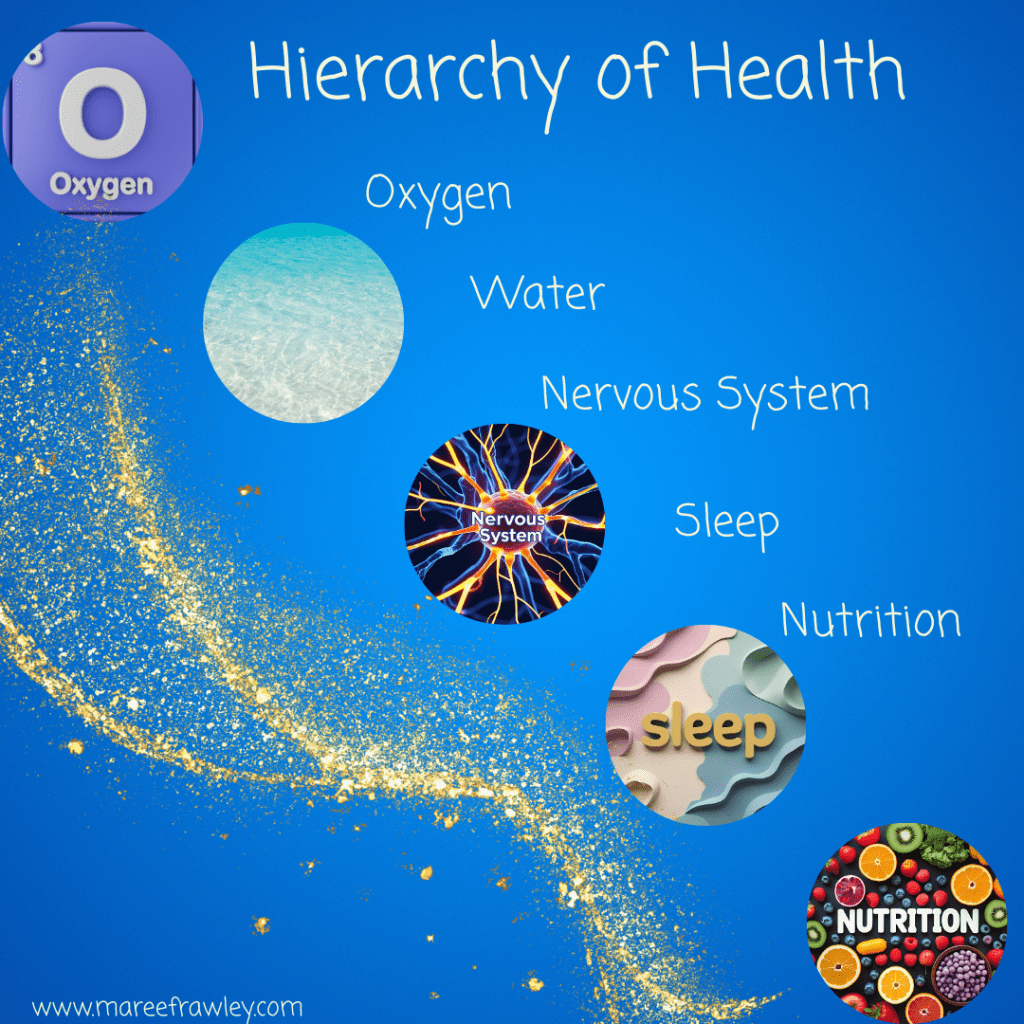
In our health journey, it is important to remember our hierarchy of health and wellbeing.
- Oxygen
- Water
- Nervous System
- Sleep
- Nutrition
This hierarchy as detailed by Chiropractor Dr Kevin Schwager is an essential foundation for balancing support and challenge and thriving with optimal health.
The definition of health is to have all aspects of your health working to their potential and in balance.
Your body is an absolute miracle that is a self-regulating, self-healing miracle!
Each segment is in more detail with “Everyday Language” and also a “Scientific Explanation”.
The next sessions will go into how to bring these into balance and high function.

1. Oxygen
Why it’s first:
Oxygen is the most immediate need for human survival.
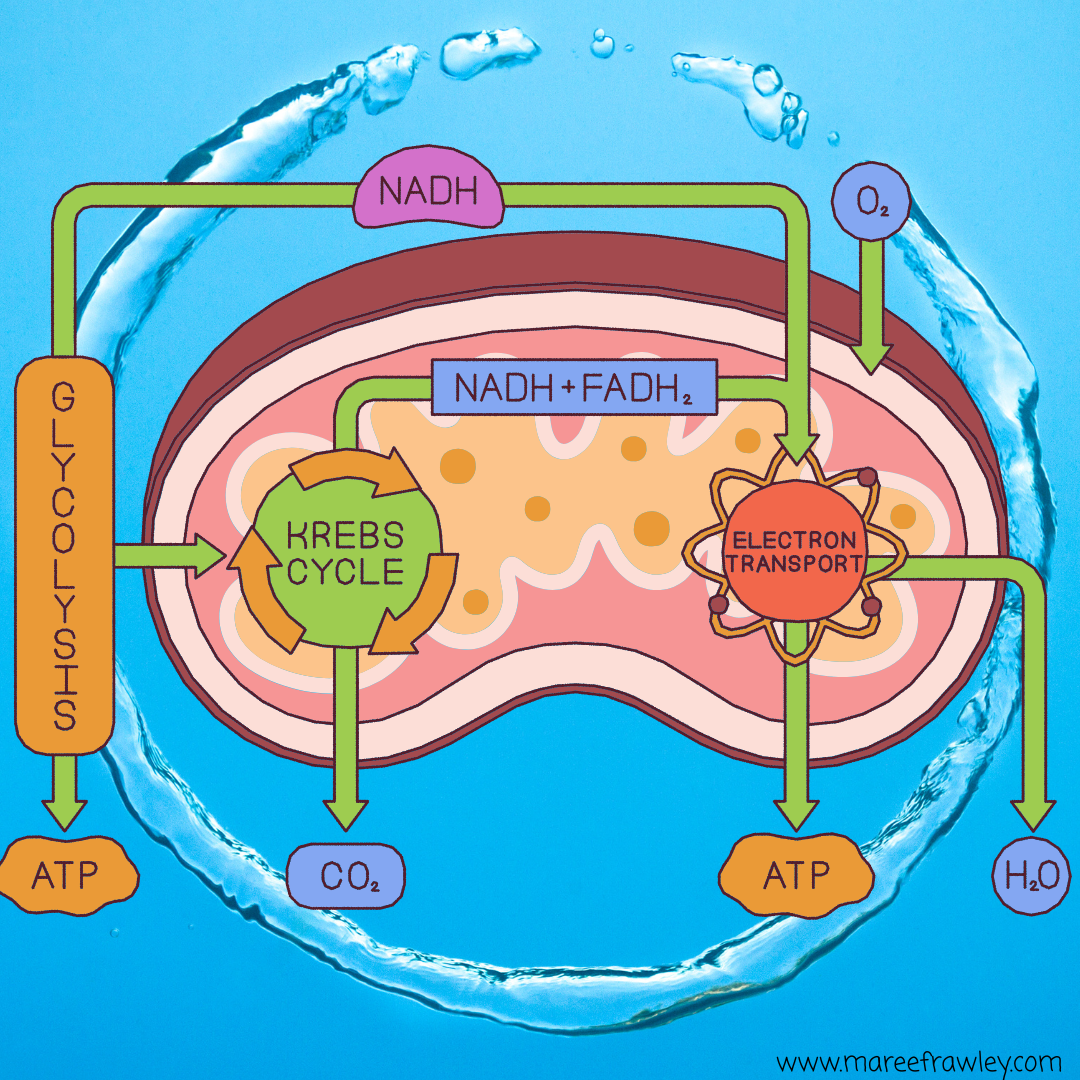
The body requires oxygen for cellular respiration, the process that produces energy (ATP) in mitochondria.
Without oxygen, cells, especially in the brain and heart, begin to die within minutes due to halted ATP production.
Everyday Language
Your body is like a car engine that needs fuel to run.
Oxygen is like the air the engine needs to burn that fuel.
Inside your cells, tiny powerhouses called mitochondria use oxygen to turn food (like sugar) into energy, called ATP.
This ATP is like the battery that powers everything your body does—thinking, moving, even your heartbeat.
If you stop getting oxygen (like holding your breath too long), the mitochondria can’t make ATP.
Without ATP, your cells start to shut down, especially the super important ones in your brain and heart.
They’re like the car’s computer and engine—they need energy the most!
If they don’t get oxygen for just a few minutes (like 4–6), they can get damaged or die, and that’s why you can’t survive long without breathing.
In short:
Oxygen helps your body make energy to keep your brain and heart working.
No oxygen, no energy, and things stop fast.
Scientific explanation – Feel Welcome to Skip this
- Cellular respiration: Glucose + O₂ → CO₂ + H₂O + ATP. Oxygen is the final electron acceptor in the electron transport chain, enabling ATP synthesis (Lehninger Principles of Biochemistry, 7th ed.).
- Brain cells die within 4–6 minutes without oxygen (anoxia), leading to irreversible damage (Guyton and Hall Textbook of Medical Physiology, 14th ed.).
- Hypoxia (low oxygen) impairs organ function rapidly, starting with cognitive decline and unconsciousness.
Time to impact:
Seconds to minutes (death within ~4–6 minutes without oxygen).
Summary – In Everyday Language
Oxygen is like the fuel for your body’s engine.
Without it, everything shuts down fast—especially your brain and heart.
2. Water
Why it’s second:
Water is essential for nearly every bodily function, including temperature regulation, nutrient transport, and waste elimination.
The body is ~60% water, and dehydration disrupts homeostasis, leading to organ failure if prolonged.
Everyday Language
Your body is mostly water—about 60%!
Water keeps everything working, like cooling you down, moving nutrients around, and getting rid of waste.
If you don’t drink enough water, you get dehydrated, which messes up your body’s balance and can make your organs struggle or even fail if it goes on too long.
Think of water like the oil in a car—it keeps everything running smoothly!

Scientific explanation – You can skip this
- Water maintains blood volume and pressure, critical for oxygen delivery and waste removal (Guyton and Hall Textbook of Medical Physiology, 14th ed.).
- Dehydration reduces plasma volume, impairing circulation and causing organ stress. Severe dehydration (loss of ~15% body water) is fatal.
- Water is a solvent for biochemical reactions, including enzyme function and electrolyte balance (Lehninger Principles of Biochemistry, 7th ed.).
Time to impact:
Days (typically 3–7 days without water, depending on conditions).
Why Filtering Water is so important!
Filtered water is crucial for health because it removes harmful heavy metals like lead, mercury, and cadmium, which can accumulate in the body and disrupt organs, hormones, and the nervous system (Journal of Environmental and Public Health, 2020).
Your body, being ~60% water, relies on clean water to flush toxins, regulate temperature, and transport nutrients.
Using filtered water for drinking, tea, and coffee is key, as boiling tap water laden with chemicals can concentrate heavy metals, making them more harmful (Environmental Science & Technology, 2019).
Opt for a high-quality filter (e.g., reverse osmosis) and avoid boiling unfiltered tap water to support safe, holistic detox and overall wellness.
Summary In Everyday Language
Water keeps your body’s systems flowing—like oil in a car.
Without it, you overheat, your blood thickens, and your organs struggle.
3. Nervous System
Why it’s third:
The nervous system (brain, spinal cord, nerves) controls all bodily functions, including breathing, heart rate, and responses to environmental threats.
While not a “need” like oxygen or water, its integrity is critical for survival, as it regulates the body’s ability to access and utilize other resources.
Everyday Language
Your nervous system is like the body’s control room or a super-smart computer network.
It’s made up of your brain, spinal cord, and nerves, which send messages to control everything you do—like moving, thinking, breathing, and even feeling emotions.
Think of it as the boss that tells your heart to beat, your lungs to breathe, and your legs to walk.
If something messes with it, like stress or toxins, it’s like a glitch in the system—things might slow down, feel foggy, or not work right.
It is here we remember…. everything is connected!
Keeping the nervous system healthy with rest, good food, and the balance of support and challenge is important to keep your whole body running smoothly!

Scientific explanation – you can skip this.
- The central nervous system (CNS) coordinates autonomic functions (e.g., breathing, heart rate) and voluntary actions (e.g., seeking food/water) (Kandel et al., Principles of Neural Science, 6th ed.).
- Damage to critical areas (e.g., brainstem) can halt vital functions like respiration, leading to death even if oxygen and water are available.
- The nervous system relies on oxygen and glucose, making it vulnerable to disruptions in those supplies.
Time to impact: Variable (seconds for critical damage like brainstem injury; longer for gradual dysfunction).Easy to understand: Your nervous system is like the body’s control center. If it’s damaged or can’t function, it’s like a computer crashing—nothing else works right.
4. Sleep
Why it’s fourth:
Sleep is essential for nervous system maintenance, cognitive function, and overall health.
While not as immediately critical as oxygen or water, prolonged sleep deprivation impairs brain function, immune response, and metabolic regulation, eventually becoming life-threatening.
Everyday Language
Sleep is like hitting the reset button for your body and brain. It’s when your brain cleans up, sorts memories, and keeps your nervous system running smoothly, like a computer getting a software update.
Sleep also helps you think clearly, stay healthy, and keep your energy up.
If you don’t get enough sleep for a long time, it’s like running your phone battery to zero—your brain gets foggy, your immune system weakens, and your body struggles to balance things like blood sugar.
Skipping sleep too often can even become dangerous, making you feel sick or worn out.
Getting good sleep is like giving your body a big hug to stay strong and happy!
Sleep and Circadian Rhythms
Your circadian rhythm is like your body’s internal clock that tells you when to sleep, wake up, and do other things, like eat or feel energized. It’s like a daily schedule your brain follows, synced with the sun—get sleepy at night, wake up in the morning.
If you mess up your circadian rhythm (like staying up late or staring at screens), it’s like throwing off your phone’s clock—your body gets confused, making you feel tired, grumpy, or out of whack.
Hours of sleep matter because your body needs enough time to do its “nightly cleanup.”
Most adults need 7–9 hours to let the brain rest, repair, and recharge, like charging a battery. Too little sleep (like 4–5 hours) is like only half-charging your phone—it might work, but it’ll run out fast, leaving you foggy, moody, or even sick over time. Sticking to a regular bedtime (like 10 PM–6 AM) keeps your clock happy and your body strong!

Scientific explanation – you can skip this
- Sleep facilitates synaptic pruning and memory consolidation, critical for cognitive health (Walker, Why We Sleep, 2017).
- Chronic sleep deprivation increases stress hormones (cortisol), impairs glucose metabolism, and weakens immunity, raising mortality risk (National Institute of Neurological Disorders and Stroke).
- Fatal familial insomnia, a rare disorder, shows extreme sleep loss can lead to death within months due to nervous system collapse.
- The circadian rhythm is your body’s natural 24-hour clock, controlled by a part of the brain called the suprachiasmatic nucleus (SCN) in the hypothalamus. It manages daily functions like sleep, wakefulness, hormone release, and metabolism, syncing with cues like daylight and darkness (Nature Reviews Neuroscience, 2007). Disruptions, such as irregular bedtimes or excessive screen time, can throw off this rhythm, leading to problems like poor focus, mood swings, or metabolic issues (Journal of Biological Rhythms, 2019).
- Sleep duration is vital for overall health. Adults generally need 7–9 hours of sleep per night to support brain functions like memory processing and toxin clearance through the glymphatic system (Science, 2013). Getting too little sleep, like 4–5 hours, can build up deficits, causing mental fog, weakened immunity, and higher risks of conditions like diabetes or heart issues (Sleep, 2017). Sticking to a consistent sleep schedule that aligns with your circadian rhythm helps your body and mind recharge effectively (Journal of Clinical Sleep Medicine, 2020).
Time to impact:
Weeks to months (severe cognitive decline within days; death in extreme cases after months).
Everyday Language Summary
Sleep is like recharging your phone.
Skip it for too long, and your brain gets foggy, your body weakens, and everything starts breaking down.
5. Nutrition
Why it’s fifth:
Nutrition provides energy and building blocks for growth, repair, and maintenance. While essential, the body can survive longer without food than without oxygen, water, or sleep, thanks to stored energy (glycogen, fat).
Everyday Language
Nutrition is like giving your body the right fuel to run well, just like putting good gas in a car. It’s the food you eat—fruits, veggies, proteins, grains—that gives you energy, builds and repairs your body, and keeps everything working, like your muscles, brain, and immune system.
Without good nutrition, you might feel tired, get sick easier, or have trouble thinking clearly. Think of it as feeding your body the tools it needs to stay strong and happy!
Monitoring chemicals and hormones in foods means being careful about what’s in your food that could mess with your health. Some foods, especially processed ones (like chips or sugary snacks), might have added chemicals, like artificial colors or preservatives, that can build up in your body and cause problems, like inflammation or tummy troubles.
Hormones, sometimes found in non-organic meats or dairy, can throw off your body’s natural balance, like making you feel moody or affecting your energy.
Sugar toxins are things like too much added sugar (in sodas, candy, or even “healthy” snacks) that can act like a toxin if you eat a lot. Too much sugar can spike your blood sugar, make you feel sluggish, and over time, stress your body, leading to issues like weight gain or even heart problems.
Simple tips to keep it healthy:
- Eat fresh, whole foods like veggies, fruits, and lean meats to avoid weird chemicals.
- Check labels for sneaky sugars (like high fructose corn syrup) or artificial stuff.
- Choose organic when you can, especially for meat and dairy, to dodge added hormones.
- Think of food as medicine—pick colorful, natural foods to fuel your body right!
By eating clean and watching out for chemicals, hormones, and sugar, you’re giving your body the best chance to feel great and stay healthy.

Scientific explanation – feel welcome to skip this
- Nutrients (carbohydrates, proteins, fats) fuel cellular processes and repair tissues. Micronutrients (vitamins, minerals) support enzymatic reactions (Lehninger Principles of Biochemistry, 7th ed.).
- Starvation depletes glycogen stores within ~1–2 days, then fat reserves, and finally muscle protein, leading to organ failure after weeks (Cahill, Annual Review of Nutrition, 2006).
- Specific deficiencies (e.g., vitamin C, scurvy) cause systemic failure over weeks to months.
Time to impact:
Weeks (typically 1–2 months without food, assuming water access).
Everyday Summary
Food is like fuel for a car.
You can go a while on reserves, but eventually, you’ll run out of energy and start breaking down.
 Maree Frawley